Tuesday, October 29, 2013

SPILLED MILK - November 2013

         by Fireweed, for the Island Word, November issue, 2013 

A short time ago in Newbury, England, the local police department started receiving late nite inquiries about a most unnerving noise. It happens every year at the same time, Sgt. Patty Fisher told the Newbury Port News , “but there's nothing spooky or scary going on.” The strange sounds come from the nearby Sunshine Dairy Farm, she explained, “and are a normal part of farming practises.” The mothers are separated from their calves almost immediately after birth in order to prevent them from nursing. Concerned callers, reported the Daily News, are advised to simply “expect loud noises from the cows at any time of the day or night.”

It's heart-breaking but instructive to recognize that the haunting bellows of a grieving mother cow communicate  imposed suffering. More and more people are re-considering conventional food choices, and calling into question so-called “normal farming practises.” For many, realizing that there is nothing 'humane' about denying a cow's maternal instinct to bond with her babies is an important first step in the transition to a more compassionate diet.

Meanwhile, industry marketers remain busy distracting their consumer base away from the many uncomfortable 'details' that dairy production entails (forced impregnation, mastitis, downed cows, veal calves, green house gas emissions, heavy water use, etc.) Their job is to convince an increasingly doubtful public that consuming the milk of another species remains desirable and necessary.

Remember the “Got Milk?” campaign, featuring stylish portraits of celebrities sporting milk moustaches? Advertising gimmicks have included promoting milk consumption as integral to building strong bones, as a cure for premenstrual syndrome (PMS), and even as an aid for weight loss. As investigative health journalist Martha Rosenberg writes in “Got Propaganda? Why All of the Milk Industry's Health Claims Have Been Proven Wrong” (Alternet, 2012), each of these campaigns has been reprimanded by independent health professionals. In the USA, the Federal Trade Commission's Bureau of Consumer Protection has demanded that the industry stop making misleading claims.
Rosenberg points out, for example, that ads designed to elevate dairy over calcium-fortified juices - a chief competitor for consumer dollars- have been brazenly contradictory. Did they think no one would notice that the very study they based their promotion of milk upon as a 'cure' for PMS actually credited calcium (not milk) with providing the alleged relief? Sufficient calcium is easily acquired without dairy products of any kind in one's diet since it is found in such a wide variety of food sources (oranges, kale and other leafy greens, almonds, broccoli, blackstrap molasses, white beans, dried figs, tofu, tahini, fortified juices, and more.)

An attempt in 2011 to employ the PMS angle again - this time with a failed sense of humour - involved ads that stereotyped women as 'always right' and men as 'always wrong.' Bumbling husbands and boyfriends were portrayed bringing home cartons of milk to supposedly placate their partners during that 'difficult' time of the month. The ads were pulled in a matter of days as an outraged female demographic cried foul over the sexist messaging. Perhaps it shouldn't be surprising that an industry predicated upon manipulation of the female body (in the form of cows' reproductive capacities), also sees economic potential in exploiting a woman's concerns with her own hormonal cycle.

In reality, the human body has absolutely no requirement for dairy products (nor the milk of any other species beyond our own) and an estimated 75% of the world's population is lactose intolerant! Cows milk consumption has actually been on a steady decline for many years (prompting the heavy push to keep people hooked), and today we find any number of tasty non-dairy milk alternatives on the shelves of popular grocery stores. It's not difficult to make homemade varieties but the convenience of commercially available organic soy, rice, oatmeal, coconut, quinoa, hemp, almond, cashew and other milks is certainly attractive. How to choose? It can take our taste buds a month or so to adjust to new flavors and stop comparing everything to the old familiar. So it's best to cleanse the palate by not switching back and forth between cow's milk and new alternatives while experimenting.

Far more challenging for many folks is giving up dairy cheese...and understandably so. The emotional addictions we develop to certain foods are often chemically based. “Casein, one of the proteins in cow's milk,” explains author Victoria Moran in “Main Street Vegan, "crosses the blood-brain barrier and becomes something called casomorphin” (an opoid, not unlike morphine.) Naturally designed to keep calves happily nursing and coming back for more, casomorphin is even more heavily concentrated once milk is turned into cheese. It can help to remember that we're not baby cows, and are no longer willing to be complicit in their fate.

Understanding the nature of our cravings is certainly the first step to releasing their hold over our taste preferences. Most of us are attuned to the classic four: sweet, salt, sour and bitter. But “umami,” or “savory,” says food writer Jennifer Valentine, is an often-overlooked taste experience commonly associated with animal products...like aged cheese. She suggests eating fermented foods, which are high in umami flavor, as one way to boost the “savory factor.” Mushrooms, miso, balsamic vinegar, tomatoes, and potatoes are also 'umami-friendly.'

Consumer demand for dairy alternatives is creating a food revolution. In Germany's all vegan foodstore chain “Veganz", shoppers can now peruse 80 different varieties of 100% plant-based cheeses! North American stores are finally beginning to increase their selections of this item, and people are also learning how to make their own. Check out my super easy recipe below for a creamy, cheezy spread including miso – a fermented condiment that practically sings 'umami'! Cheeze Louise also makes a delicious filling for spanakopita or lasagna.

Please visit the links list on the right hand side of this page for highlighted references, recipes and more! 

Cheeze Louise

Ingredients:
1 block medium firm organic tofu (350 grams)
1 cup raw, unsalted cashews (soaked 8 hours or overnite)
1/4 cup nutritional yeast
2 T. light or dark Miso (your choice)
1/2 tsp. organic lemon juice (fresh or bottled)
1/2 tsp. sea salt, dash of pepper
Optional:
dill, carmelized onions, pine nuts

Directions:
Press, or squeeze excess water from the tofu, drain the cashews and pat dry. Place all ingredients (except for the optional items ) in a food processor. Blend until creamy. Depending on the tofu, you will need to stop and start, removing the mixture from the blade and/or sides of the bowl with a spatula. Thin with another 1/2 teaspoon of lemon juice if very thick. Depending on the intensity of the miso, you may also want to add a wee bit more salt. Refrigerate for a couple of days in a glass jar to allow the flavors to deepen…patience is a virtue here, and this spread will easily last a week. 

To use the mixture as a filling for spanakopita right away, omit the lemon juice if your food processor will blend the ingredients without it, remove to a new bowl, fold in a T. of fresh dill (or 2 tsps.dried), 1/4 to 1/2 a cup of carmelized onions (sauteed ahead of time in a little olive oil over low heat until browned, and set aside to cool), and 2 T. pine nuts. Combine with a generous amount of fresh chopped spinach (or well drained frozen spinach) and spread on phillo pastry brushed with olive oil to roll or fold into individual spanakopita. Bake on a dark cookie sheet at 425 F until golden brown (about 10 minutes…maybe 15), and enjoy! 

Happy Celtic New Year:) 

To read the article I wrote for this time of the year in 2012, please click here: http://www.thetransitionkitchen.blogspot.ca/2012_09_01_archive.html


Tuesday, September 3, 2013

SOWING FOR SUSTAINABILITY - September 2013


                                          by Fireweed, for the Island Word, September Issue, 2013


     The word sustainability is used with increasing frequency these days but what does it actually mean?

     In an ecological sense we know that biological systems like forests and wetlands must support a diverse network of life-forms to remain healthy and 'productive' over time. For human beings however, sustainability is generally understood to be a reconciliation of perceived economic needs and social equity, in addition to environmental needs.

     As Michael R. Redclift writes in 'Sustainable Development (1987-2005) - An Oxymoron Comes of Age,' sometimes people define their 'needs' in ways that effectively exclude others from meeting theirs. In the process this “can increase the long-term risks for the sustainability of other peoples' livelihoods.”

     More importantly, Redclift adds, “the process through which we enlarge our choices, and reduce those of others, is largely invisible to people in their daily lives, although understanding this process is central to our ability to have more 'sustainability.'”

     Dr. Richard Oppenlander, author of “Comfortably Unaware” (2011) and “Food Choice and Sustainability” (2013) is dedicated to exposing the massive impact our collective dietary choices are having on what he refers to as “global depletion.” Locavorism (basing one's diet  as much as possible on food grown within an approximately 100 mile radius) has been popularized as a fitting response to food security and fossil fuel scarcity concerns here in the West for those with the privilege of choice. However, Oppenlander illustrates that what we eat is just as significant and often more so than so-called food miles. As long as we remain wedded to animal-based agriculture he points out, we are failing to address the all important 'big picture.'

      There are over 7 billion people on the planet today and over 70 billion animals are raised each year to feed them. Loss of biodiversity, water scarcity, agricultural land use inefficiencies, habitat loss, the state of our oceans, world hunger, and the sustainability of our own health are not simply a factory farming issue. “The problem,” Oppenlander explains in his presentations, “is a 'raising animals to eat' issue.”

      There are an estimated one billion people suffering from hunger today and at least six million children die annually from starvation. 82% of these children live in countries where food surpluses are fed to animals that are then killed to be eaten by more well-off individuals in developed countries. “Of course world hunger has many layers of complexity,” says Oppenlander. But the looming shadow of our current demand to eat livestock and fish is tied to poverty because consumer demands affect food prices, food availability, food policy making and even education to 'improve' agricultural systems in developing countries which are becoming increasingly locked in to animal agribusiness.

      Oppenlander stresses that suppression and mismanagement of this problem has only aided the failure of climate change summits to advance important target goals. It really won't matter how many hybrid cars we switch to or how many lightbulbs we change out if we don't change what we see on our plates, he admonishes. 

      The UN FAO (Food and Agriculture Organization) recognizes that animal agriculture contributes more GHG (Green House Gasses) to the atmosphere than all transportation combined. And it's well worth noting that studies comparing the methane emissions from grazing and feedlot cattle have found that grass-fed cattle produce abut 4 times more methane than grain-fed cattle (Journal of Animal Science.)

     According to the Environmental Working Group, if everyone in the US alone ate no meat or cheese just one day a week, that would be like taking 7.6 million cars off the road. But Oppenlander rightly questions why those serious about sustainability would choose to limit themselves to “baby steps.” The threat of runaway global warming, for example, requires an adult response. Reducing GHG emissions on Monday doesn't make it OK to keep contributing to the problem six other days of the week when it is well within our means to avoid doing so.
   
      The good news is that whether you're just warming up to the idea of shifting your diet away from reliance on animal products, or ready to be part of the growing movement calling for widespread dietary reform, more and more major public interest groups are providing encouragement.  The Union of Concerned Scientists (UCS), for example, points out that "the best way to take a bite out of climate change is to reduce meat consumption, especially beef."  And according to their new US stats-based 2013 report, The $11 Trillion Dollar Reward, an increase in the consumption of fruits and vegetables would save more than 100,000 American lives and $17 billion in health care costs incurred from heart disease annually. As we've seen, we really must go much further than simply cutting back on beef. Of course it makes perfect sense to keep supporting local farmers' markets wherever we live in the world... as long as we're loading up on plant nutrition choices.
     
     
SPUDS Co-op practises stock-free growing
     SPUDS (Sowing Potatoes Underground for Denman Sustainability) is the name of a small local food security co-op in my rural island community off the west coast of British Columbia, Canada. Recently we harvested our best crop yet from land we've been tending collectively without the use of any animal inputs whatsoever for the past six years. The stock-free growing techniques we use instead include crop rotation and sowing green manure cover crops like clover, vetch and over-wintering pea to feed the land directly - there is absolutely no need to first pass these plants through the body of an animal to promote soil fertility. Just as there is no need to eat animals when the nutrients our bodies require for optimum health can be obtained directly from plants.

     While SPUDS co-op membership is diverse and our dietary persuasions vary, we all love our potatoes. At harvest time I can't help but reflect on the plight of my own ancestors and the role of the potato in their lives. Prior to the Great Famine in Ireland, colonization by the British pushed peasant farmers off the best pasture land. I know that on one acre of land with good soil and irrigation it's possible to grow at least 100 times more pounds of potatoes for human consumption than pounds of beef. But the natives in Ireland were replaced by beef cattle destined for export that eventually took over most of the countryside. This peasant population was forced to depend on the only potato they had to grow on the marginal lands available – the Irish Lumper. When the potato blight arrived (most likely by ship from the eastern seaboard of the USA), the devastation of this monocrop led to death by starvation and disease of a million men, women and children.

     Sometimes we are slow to learn from the lessons of the past, but collectively we do have the power to help transition our global food systems in a far more sustainable direction. Slainte! (“To your good health!” – Irish Gaelic)

SPUDS Co-op, Denman Island, BC, Canada 2013

Fireweed's Vegan Organic Potato Pate

This recipe makes a delicious sandwich filling, or tasty appetizer on crackers. I've even used it to stuff dolmades, and baked mushroom hors d'oeuvres!

3 cups grated peeled raw organic potato (press out liquid)
1 cup raw sunflower seeds (organic unsalted)
1/4 cup spelt flour (or gluten-free quinoa flour)
1/4 cup nutritional yeast
1/2 onion, finely chopped
1 lemon (just the juice)
2 tsp. dried basil
2 tsp. dried oregano
2 tsp. dried dill
1 tsp. sea salt
2 T. organic sunflower oil
black pepper
sesame seeds
optional: leave out salt and add 1/2 an herbal veggie bouillon cube

Combine all ingredients in a food processor and blend until well mixed but still 'grainy' (you don't want a batter.) Adjust seasonings to taste then spoon into an oiled pan with parchment paper on the bottom. Smooth surface with the back of a wet spoon or spatula. Sprinkle with additional herbs and sesame seeds. Bake for 40 minutes (or more, depending upon the depth of the pan you use) and cool before cutting. Best served at room temperature or chilled. Spread on rice crackers and top with pickle or serve on crusty bread in a sandwich. Bon appetit!

For links related to 'Sowing Sustainability', including a few more tasty potato recipes,  please look for September 2013 RELATED LINKS on the right hand side of this page.


Note: "Sowing Sustainability" has been slightly modified from its original version in 'The Island Word'. For other articles by Fireweed for The Transition Kitchen, please scroll down or visit the blog archive on the right hand side of the page. You might have to access the main page by clicking here:  www.thetransitionkitchen.blogspot.ca  Feel free to share…thanks!

Tuesday, June 4, 2013

PLANT POWERED! - June 2013

                              by Fireweed, for the Island Word, June issue, 2013 

 As the summer solstice rolls round once again, those of us blessed with well-watered gardens are sure to be praising the welcome warmth of the sun! Some sources suggest that the idea for Father's Day in June may have even originated with pagan devotion to the golden orb as the source of all life.


     Recorded history, however, credits an American from Spokane, Washington in 1910. Sonora Smart Dodd had been moved by a sermon about parental sacrifice delivered on Mother's Day two years earlier. She was inspired to find a way to also commemorate the unsung feats of her widowed father, and his birthday was in June. It would take more than six decades for Father's Day to become permanently established in the USA, but the occasion is now acknowledged around the world. Not all countries celebrate the day quite as close to the summer solstice.

     Many cultures have portrayed the sun as a masculine force, and the moon as a feminine one. In reality gender isn't binary but exists on a spectrum. However gender stereotypes reinforced through mythology and social bias still permeate many aspects of our lives, as a glance through the Father's Day selection in a card shop quickly reminds us. We are prompted to faithfully uphold the presumption that a 'manly' life revolves around competitive sports and fishing rods! Just as the energy of the sun is all-powerful, masculinity is still commonly portrayed as all about physical strength and dominance. Maintaining this 'tough guise' requires fuel. As patriarchal convention would have it when it comes to protein, meat is considered 'king'.

  The widespread idea of plant protein as somehow inferior to animal-based protein is, in part, connected to gender prejudice. In “The Sexual Politics of Meat” author Carol Adams explores the history of meat as a symbol of male power. She also reveals how the association of plant foods with femininity in many male-dominated societies has underscored a hierarchical mindset that views both women and nature as subservient. The misguided notion that at least some animal flesh must be consumed in order to ensure optimum health is not all that different from the magical belief that ingesting the body parts of powerful animals will enhance a man's sexual prowess. Certainly neither notion mirrors the findings of contemporary peer-reviewed science. Both the American and Canadian Dietary Associations, for example, now endorse a varied and completely plant-based diet as not only perfectly adequate but providing health benefits in the prevention and treatment of certain diseases.

     The quest for a high level of physical fitness certainly needn't be equated with machismo. But an increasing number of competitive athletes today are proof positive that a 100% plant-based diet can help achieve peak performance. Famous Olympian Carl Lewis, for example, credits a vegan diet for having enhanced his notable track record. Last year 42 year-old vegan Juliana Sproles was named the “toughest woman on the planet” after winning the grueling 24 hour-long 'Tough Mudder' competition. Retired Canadian hockey player Georges Laraque's switch to a 100% plant-based diet came after learning about the environmental and animal welfare costs of meat through the powerful film “Earthlings”. He has found himself rewarded with an increase in energy, not a lack of it.
  
       Nonetheless, backlash against plant-based sources of protein continues to perplex the general public. Misinformation about soy includes such outrageous claims as the notion that the estrogen content of this nutritious bean is responsible for a decrease in penis size, sexual 'confusion' and homosexuality. First of all, soyfoods contain isoflavones - sometimes referred to as 'phytoestrogens' - but these are not the same as estrogen and their physiological effects differ significantly. According to numerous studies, including a meta-analysis published in Fertility and Sterility based on more than 50 treatment groups, soy foods have not been found to affect testosterone levels in men. (“Settling the Soy Controversy”, Dr. Neal Barnard, Huffington Post, Feb., 2010). Who to believe? The American Journal of Clinical Nutrition reported that an analysis of 14 studies showed increasing soy in the diet associated with a 26% reduction in prostate cancer risk. These results were consistent with the researchers earlier meta-analysis of another 8 studies about the benefits of soy consumption by men. 

     A truly serious and preventable problem is the overconsumption of animal-based protein wreaking havoc on individual and collective health where plant-based options are (or should be) available. It's high time to challenge the stereotypes that discourage turning away from the myth of meat in favour of better health, greater compassion for animals, concern for the environment and an end to gender discrimination of all kinds. Here's a delicious, versatile soy recipe (great for breakfast, lunch or supper) just in time for Father's Day or a summer solstice picnic. Enjoy!

NOTE: By the way, if you are in the neighbourhood, check out our next community vegan potluck here on Denman Island on June 23rd...we'll be sharing a film or two featuring men who no longer buy into the 'meat myth'! Click here for details: www.denmanpotlucks.blogspot.ca

Fireweed's Tofu Quiche

Ingredients:
1 and 1/2 packages of firm organic tofu
1 medium sized leek
1/2 a dozen brown mushrooms, sliced
1/4 cup non-dairy milk
1/2 cup nutritional yeast flakes
1 herbal veggie bouillon cube, crumbled
1 Tablespoon chick pea flour
1 medium clove garlic, pressed
1/2 tsp tumeric
1/2 tsp dried basil (or fresh herbs)
1/4 tsp or more black pepper
1/4 tsp or more sea salt
a pinch of cayenne (don't overdo it!)
1/2 cup shredded* Daiya cheese (or other non-dairy option; *the shredded Daiya is palm oil-free)
optional: cooked potato, and veggie sausage (I've decorated the quiche on the right with parsley, and flowering thyme from my garden)

Directions:
     Clean and chop the leek, roughly chop the sliced mushrooms, and sautee the whole lot in a little olive oil on medium heat. Stir to avoid sticking and burning then set aside to cool. Cut each block of tofu in half or quarters and squeeze out the excess water. Place it in your food processor along with all the other ingredients except for the vegetables and the Daiya cheese (this is a pre-shredded non-dairy vegan cheese, but you could experiment with another brand. It adds flavor and also acts as a bit of a binder- so does the chick pea flour). Blend, scraping down the sides of the food processor to incorporate all ingredients well. You don't want it to be too thin, so avoid adding additional liquid unless it is too thick to blend. Taste the mixture and add additional herbs and other seasoning if you wish.

     Transfer to a large mixing bowl and fold in the leeks and mushrooms, then add the cheese. At this stage you can dress up your quiche with additional items like a little diced cooked potato, or a chopped veggie sausage. Spoon the mixture into a well-oiled glass pie plate, and press to fill. Smooth the surface with a spatula and bake in a 350 degree oven for 45 to 50 minutes. After about half an hour, gently perforate the pie in several places with a sharp knife or fork to help release moisture and firm up the contents. Allow to cool on a cookie rack briefly before slicing with a sharp knife. Enjoy immediately, or reheat and serve. This recipe also freezes well. Bon appetit!


Saturday, March 30, 2013

NEW BEGINNINGS - April 2013

                  by Fireweed,  for the Island Word, April issue, 2013


March herring spawn- Denman Island, BC, Canada
      Waking up to the ruckus of visiting sea lions is routine in our home at this time of the year (and absolutely preferable to being roused by the neighbourhood roosters!) 
Having arrived in great numbers in anticipation of the annual herring spawn, these massive marine mammals are definitely the official harbingers of spring in this particular corner of creation. Once again, local beaches are glittering with tiny fish eggs and a primordial feast of plenty is nourishing the vast marine environment. Out of every 10,000 eggs laid, just one herring is estimated to miraculously survive to return to spawn and help ensure that the incredible biodiversity of this ecosystem continues to flourish.

             Eggs have always symbolized rebirth and renewal. Whether or not the proverbial chicken came before the egg may still be up for debate, but various traditions linking eggs with the fecundity of springtime certainly existed prior to Christianity. Easter always falls on the first Sunday after the first full moon following the vernal equinox, when the scales tip again towards longer days and shorter nights. The increasing daylight we are now enjoying has stimulated the pituitary gland behind the eyes of birds, activating their reproductive cycles. Of course it is the domestic chicken – a hybridized descendant of the jungle fowl in India and Southeast Asia - who produces the colourful eggs associated with springtime and the Easter bunny here in North America today.

     Hens are prompted to lay some 1.3 trillion eggs for human use around the world each year. Extended artificial lighting forces unnatural production levels, and birds that might otherwise live from 10 to 15 years are 'spent' in just twelve to eighteen months. Of the 79 billion eggs produced annually in the US alone, 99% are from birds confined to battery cages. In Canada, 95% of egg layers live in windowless sheds housing on average more than 18,000 birds and sometimes as many as 400,000! Industry regulations require only 67 square inches of space per hen (less than the size of a standard sheet of writing paper).

     A forerunner of today's vast factory farms for a wide variety of animal 'products', the automated battery cage system was devised in the 194O's to maximize profit by producing eggs at the lowest possible cost. This kind of 'efficiency' requires about 2 kilograms of feed to produce one kilogram of eggs. In contrast, so-called 'free-range' eggs still come from birds raised in huge buildings with very little additional room to move, or access to fresh air and natural light. However, it costs 18% more to feed them. Eggs from certified organically-raised hens require feed grown without pesticides or chemical fertilizers. Not only does this make their feed significantly more expensive, these birds also need approximately 20% more food than their caged counterparts. Obviously, we can expect the market niche for pricier eggs to remain very small in the greater scheme of things. As long as the demand for any eggs exists, so will a cheap supply.

     Back-yard chicken-keeping requires the space, time, money and commitment to provide clean housing, good quality feed and fresh water daily, adequate veterinary care and protection from predators. Where I live in the country many folks keep a few chickens on small homesteads, often attracting rats and raccoons. Birds are not infrequently killed by mink or hungry eagles. Occasionally we'll hear of a dog attack or of a bird run over on the road. And there is always someone looking to give away hens they decide they are no longer able or interested in feeding, sheltering or cleaning up after, or roosters they never intended to end up with in the first place. People with limited experience engage in backyard slaughter, even mistaking a chicken's lack of struggle when held in a certain position, as a 'state of calm' (rather than as the 'playing dead' response many animals resort to once they have determined that escape is no longer an option). Longterm commitment is more than what some locavores have bargained for. Primarily in urban environments, this has led to an influx of surrendered birds to many animal sanctuaries. And we don't even need eggs!

     Josh Tetrick, founder and CEO of Hampton Creek Foods, is dedicated to developing and providing affordable alternatives to animal products. His high tech company has created 'Beyond Eggs' to meet both the needs of ethical consumers and the financial bottom line of the enormous food manufacturing industry. Tetrick thinks the solution to inhumane treatment of hens, the serious environmental problems associated with intensive chicken farming (from GHG emissions to toxic run-off), and the serious threat of food-born illnesses, is to take the bird completely out of the equation.

     Indeed, 'Beyond Eggs' has mastered virtually everything an egg can do for baked goods, dressings and sauces, pasta and more- all with plants. It costs less, has a smaller ecological footprint, and achieves stellar taste test results! Innovative new products like these, designed to win over mainstream food producers, may very well help transition society as a whole towards a far more compassionate and sustainable way of feeding nine billion people on a finite planet.

 Fortunately, for those of us with the privilege of choice who enjoy cooking 'from scratch', both pre-packaged egg replacer products and whole foods alternatives are readily available in the produce or baking supply sections of many food stores. Applesauce, mashed banana, and/or flax seeds easily replace eggs in cakes and muffins as healthy 'binders'. And it's baking soda, powder or yeast that typically provides 'the rise' in most baked goods- not eggs. Here's a very easy recipe for fluffy pancakes that uses carbonated water to provide a little extra lift!

Blueberry Pancakes
Ingredients:
1 1/3 cups whole wheat pastry flour (or combination of whole wheat and buckwheat flours )
2 tsp baking powder
1/4 tsp salt
1 cup soy, almond or homemade nut milk
1/3 cup carbonated water (club soda or Pellegrino)
1 Tbsp. Sugar
1.5 Tbsp. organic vegetable oil (sunflower, canola, etc)
1/4 cup blueberries (can be added fresh in season, or partially frozen)

Directions:
Combine all dry ingredients. In another bowl stir together milk, water, sugar and oil. Immediately fold liquid ingredients into the dry, scraping down the sides of the bowl with a spatula to combine completely. Gently fold in blueberries.
Only two pancakes at a time on a hot, lightly oiled griddle is best. Flip when bubbling, and the spatula goes underneath easily. Decrease or increase the liquid in this recipe if you prefer thicker or thinner pancakes. Serve with maple syrup and additional berries, or your favorite preserves. Bon appetit!

Bonus Recipe……….
Space is tight in the Island Word where this column appears in shorter form hard copy, so I'm going to squeeze in another egg-free recipe for my online readers here. Of course baked goods are not the only place eggs are used. For other egg-free recipe ideas and more, please visit the column on the right hand side of this page under "April 2013- Related Links"!


Fireweed's Chocolate Cake Supreme
This is my favorite vegan cake for birthdays and special events…rich, moist and made with all organic ingredients- including fair-trade chocolate, of course!

Ingredients:
2 cups all purpose organic whole wheat flour
1 cup organic whole wheat pastry flour (or you could just use 3 cups all purpose flour)
3/4 cup of organic cocoa powder (I use Cocoa Camino)
2 teaspoons baking soda
2 teaspoons baking powder
1 teaspoon salt
2 3/4 cup organic brown sugar
1/4 cup white vinegar
2 cups water
2 teaspoons organic vanilla
1 cup organic sunflower oil
2 ripe organic bananas

Directions:
Lightly oil two round cake pans and flour the sides to avoid sticking (or whatever shape of pan you choose to use). You can also cut rounds of parchment paper for the bottom to help release your cake later. 

Turn oven on to 350 degrees F.

Mix together all dry indredients (making sure to break up any lumps that can sometimes form with brown sugar) until thoroughly combined. In a blender place your bananas, water, oil, vinegar and vanilla… only turn on after securing the lid (note to self!) Once well blended, pour these wet ingredients directly into the bowl containing your dry ingredients and stir the two together with a spatula, scraping down the sides of the bowl and pressing out any lumps on the side of the bowl.

Once your batter is smooth, immediately pour one half into each of your two pre-prepared cake pans, and place both on the same rack in your pre-heated 350 degree oven. Bake for thirty minutes before testing with a toothpick or sharp knife. If it doesn't come out clean, give the cake up to another ten minutes. It should spring back to the touch.

Note: If you decide you want to make this cake in one rectangular pan, give it about 50 minutes, and again, check to make sure it's baked all the way through before removing from the oven and cooling on a cookie rack. Gently go around the outside of the pan with a knife to avoid any sticking before removing cake from pans for frosting.
Frosting:
Refrigerating this cake before icing it helps avoid damaging the soft surface. Apply a semi-firm vegan frosting of your choice. Less chocolate means a lighter background to accentuate your darker decoration (and is less expensive!)  I combine melted chocolate with organic powdered sugar and coco (coconut) butter with a dash of vanilla, then add a little nut milk to achieve desired spreadability for my base coat. You can make your own powdered sugar with organic unbleached white sugar in a coffee grinder.

For a decorative effect like the one you see directly above and below, melt more organic chocolate in a double boiler on your stovetop, then add some kind of non-dairy milk to thin the hot, melted chocolate…you can use soy, almond or rice milk, or a homemade nut milk. Keep stirring to thoroughly blend. For the cake in the photo I also melted in a little coco butter for a thicker consistency, but a thin drizzle of dark chocolate makes a very pretty pattern too. 

This technique is fun, but does take a little practise…use a spoon and test your melted chocolate mixture on a plate before heading for the cake! If it's still too thick to flow off the spoon add a bit more milk. Refrigerate right away to firm up your artwork, but serve at room temperature to soften the icing. 

The cake I included a photo of at the top of this recipe was decorated with a thin chocolate icing (not just melted chocolate)…it's pretty, but a lot more time consuming with messy piping bags and nozzles, than the quick drizzle effect!

If you are on Facebook, visit my Cakes & Catering page by clicking HERE for additional decorating ideas. 

Bon appetit!


Thursday, November 29, 2012

TOWARDS A GREEN FUTURE - Dec., 2012


                   by Fireweed, for the Island Word, Dec. Issue, 2012

     As my partner tells the story, getting close enough to the big buck to remove the fishnet fencing wrapped around his antlers was far from easy! The diverse group of islanders who showed up to help out on that cold November night never did come to consensus around how best to handle the situation safely. But hours into the ordeal, the poor deer's head was finally pinned to the ground with the same fencing that had originally bound his body too. A large pair of pruning sheers wielded by one brave individual worked its magic, then everyone jumped behind the closest trees as the powerful animal struggled to his feet. Wild eyes shining in the glare of blinding flashlights, he stood perfectly motionless in the high salal for one long moment, then leapt to freedom in the surrounding forest.

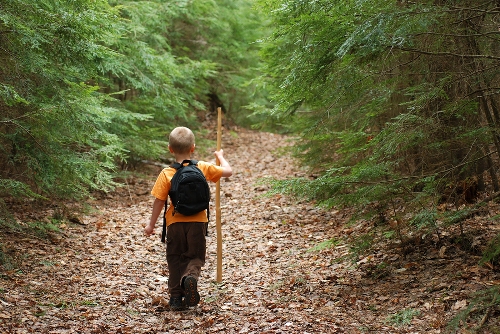
     It's easy to forget sometimes that the only connection many urban children have in the world today with wild animals is through the books they read, and the mythology of cultural traditions shared with them. Even in biologically diverse places, however, many of us are acutely aware that habitat is shrinking for the creatures with whom our lives intersect in greater and greater frequency. In “Last Child of the Woods,” author Richard Louv records the remarkable collapse of children's engagement with nature as taking place even faster than the collapse of the natural world. What stories will our great grandchildren be relaying to their offspring if the animals threatened today exist only in those young imaginations alongside Santa's reindeer? 


     Edith Cobb's essay, “the Ecology of Imagination in Childhood,” suggests that contact with nature is crucial to creativity. Through studying the biographies of some 300 geniuses, Cobb discovered that intense experiences in nature between the ages of 5 and 12 were a common theme. She contends that animals and plants are among “the figures of speech in the rhetoric of play...which the genius in particular of later life seems to recall.” In his own writing, the Guardian's George Monbiot has lamented that without the intensity of engagement with nature at a young age, people will not devote their lives to protecting it.

     Given what we know today about global warming, it is imperative that adults respond collectively on behalf of the world's children and future generations of all species as swiftly as possible.

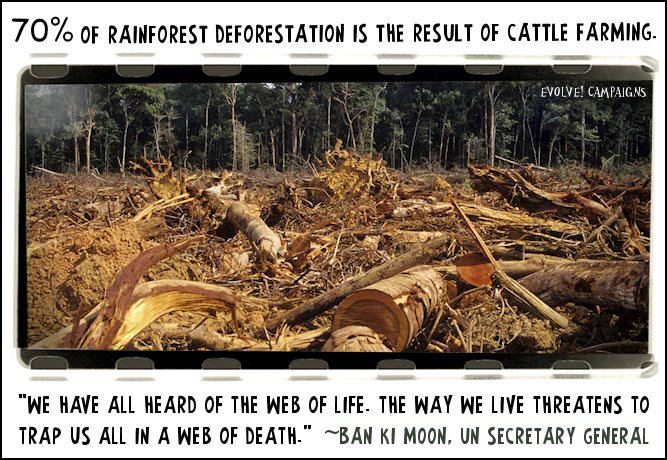
     According to environmental scientist Dr. Robert Goodland, there is one pragmatic way to reverse climate change before it is too late. Research indicates that “large-scale reforestation and regeneration of forests could absorb all of today's excess atmospheric carbon - while sufficient land can be freed up by replacing at least 25% of today's livestock products with better alternatives. That's because a whopping 45% of all land on earth is now used for livestock and feed production.”

    To quote the prophetic genius Albert Einstein, “Nothing will benefit human health and increase chances for survival of life on Earth as much as the evolution to a vegetarian diet.” Many other changes are certainly also called for, but Goodland contends that the agricultural sector must be a key player in reversing climate change immediately. And that consumers have to play “an equal role in their capacity to vote with their forks to replace meat, dairy and eggs...”

     With a brand new year fast approaching, there's no time like the present to start making those positive dietary changes. Breaking ties with long-held holiday food customs is easier when we consider that much of what we've been taught to uphold as “tradition” at this time of the year has never really stopped evolving! For example, while various cultures have long participated in festivals of light during the month of December (Hanukkah, Kwanzaa, etc.), Christmas in particular is a composite of both old and new sensibilities.

     Long before the advent of Christianity, the Roman Festival of Saturnalia honoured Saturn - god of seed and sowing - with a whole week of feasting, gift giving and revelry from the 17th of the month to the 23rd. For millennia, winter solstice celebrants have marked the longest night of the year and the “newborn” sun with candles and bonfires around the 21st and decorated their homes with sacred evergreens. Cut Christmas trees are a relatively recent “tradition,” once strongly opposed by the Christian church due to its mis-association with pagan tree-worship. Apples are symbols of the sun god Apollo and, therefore, appropriate representations of the returning sun at winter solstice. Today, shiny bright red tree ornaments have taken their place. Many pagan symbols were eventually incorporated into the new religion of Christianity, which was clearly superimposed over the old ways, preexisting holy days and sacred sites throughout Europe.

     Even Santa is a shape-shifter who has adapted to time and place. In the reindeer-herding areas of Siberia, natives have identified the moon in the sky as a man on a sleigh that can be pulled by reindeer to heaven. Tribal shamans dressed in red and white, ritually ingest the hallucinogenic amanita muscaria to fly to the sacred world tree where their magic reindeer live. Siberian reindeer actually consume these red and white mushrooms as food, seeking them out under the snow. No wonder their otherworldly counterparts are capable of flying around the entire earth in just one night! In Britain, Father Christmas dates at least as far back as the 17th century. At that time he traveled by goat and dressed in a long green robe. It was through his Dutch counterpart Sinterklass that modern day Santa Claus has found his way down North American chimneys, and into our contemporary “traditions.”


     This Christmas Eve, why not leave out a glass of organic apple juice for the jolly old elf and let the kids know what makes this delicious fruit extra special during the week of winter solstice? Introducing ourselves to a few new organic, 100% plant-based recipes during this time of general overindulgence is another great way to transition to a greener lifestyle and create new family customs!

     “Teaching a child not to step on a caterpillar,” wrote Bradley Miller, “is as valuable to the child as it is to the caterpillar.” Reducing our ecological footprints by eating low on the food chain is valuable to future butterflies, reindeer and children alike.

Saturnalia Salad

This festive dish is chock full of protein, anti-oxidants, and the colours of the season!

Main Ingredients:
    • one head of broccoli, finely chopped (3-4 cups, with stem removed)
    • two yellow or red apples (unpeeled), cored and finely chopped, then tossed in a little lemon juice to avoid browning
    • 1/3rd cup red onion, finely diced
    • 1 cup purple cabbage, finely chopped
    • 1/2 cup of raisins
    • 1/2 cup of chopped walnuts
    • the seeds from one medium sized pomegranate
    • one romaine lettuce heart
Dressing:
  • 4 Tablespoons tahini
  • 2 tsp. cumin
  • 1 tsp. ground coriander
  • 1 tsp. sea salt (more, to taste)
  • 1 tsp. ground black pepper
  • 1 tiny pinch of paprika, or chili powder (don't overdo it!)
  • 1/4 cup lemon juice (fresh squeezed or Santa Cruz organic)
  • 1 tablespoon balsamic vinegar
  • 1/4 to 1/2 cup water
  • 1 small pinch of powdered stevia, or 2 tsp. agave syrup

Prep:

Except for the water, measure all dressing ingredients into a blender. Add half the water, then blend. If the mixture is really thick, thin with more water. Taste, and adjust seasonings. Combine all the salad ingredients in a bowl except for the pomegranate seeds and lettuce. Toss well, then pour in 1/2 of the dressing and toss again. Now chop the romaine heart and fold gently into the other ingredients along with the pomegranate seeds. Plate, and drizzle with additional dressing. As a meal in itself, this hearty recipe will satisfy 3-4. As a side dish it makes about 10 yummy servings.

For more delicious and nutritious holiday feasting ideas, visit the LINKS column on the righthand side of this page. Bon Appetit!


Also, if you're in the region or plan to visit, feel free to join in on Denman Island's long-running Winter Solstice Community Vegan Potluck on Saturday, Dec. 21st (updating this for 2013)! Click here, for details.